






v_36cell = [
(1, 0, 0, 0),
(0, 0, 1, 0),
(0, -1, 0, 0),
(0, 0, 0, -1),
(1, 1, 0, 0),
(-1, -1, 0, 0),
(0, 1, 0, 0),
(-1, 0, 0, 0),
(0, 0, 1, 1),
(0, 0, 0, 1),
(0, 0, -1, -1),
(0, 0, -1, 0) ]
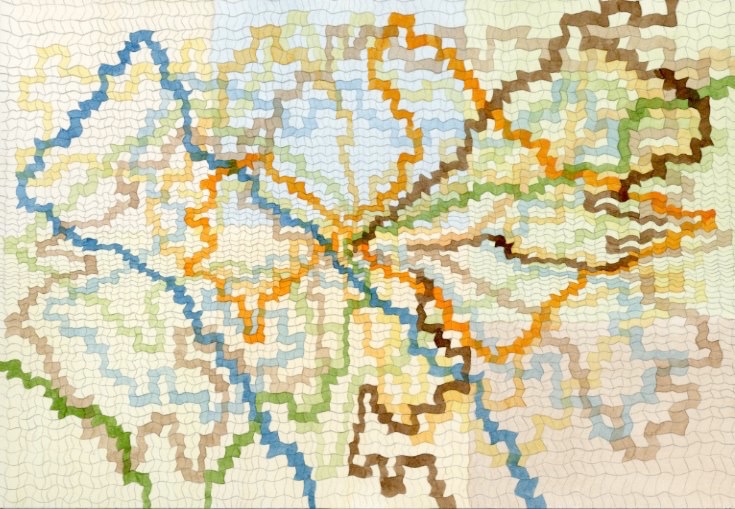
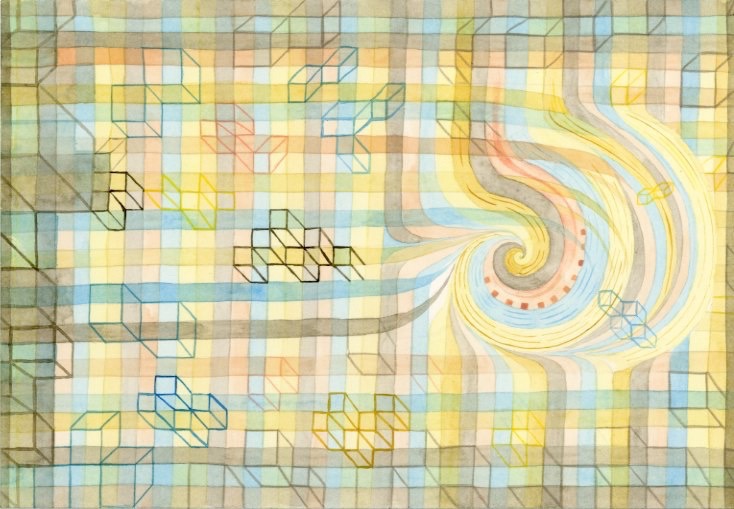
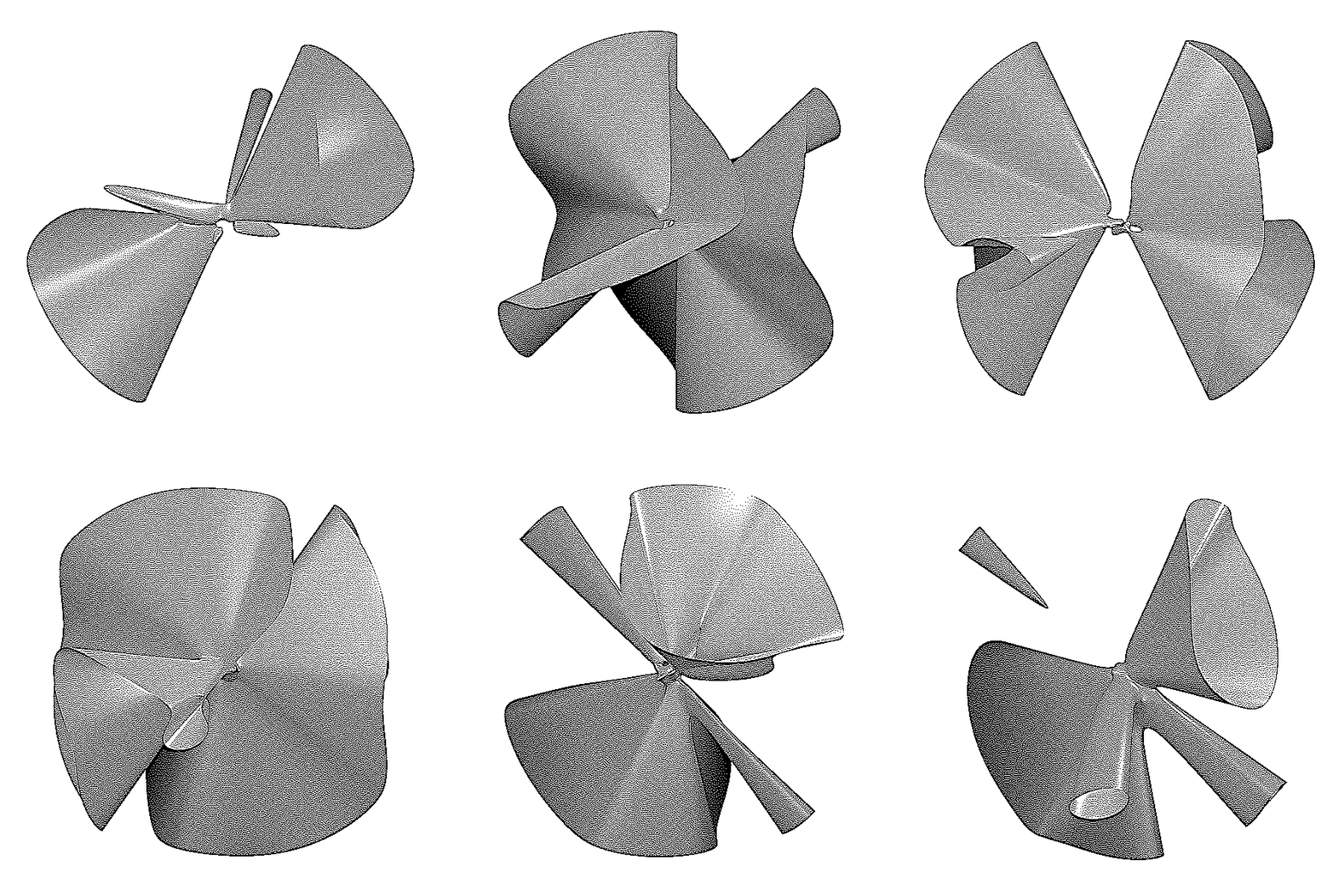
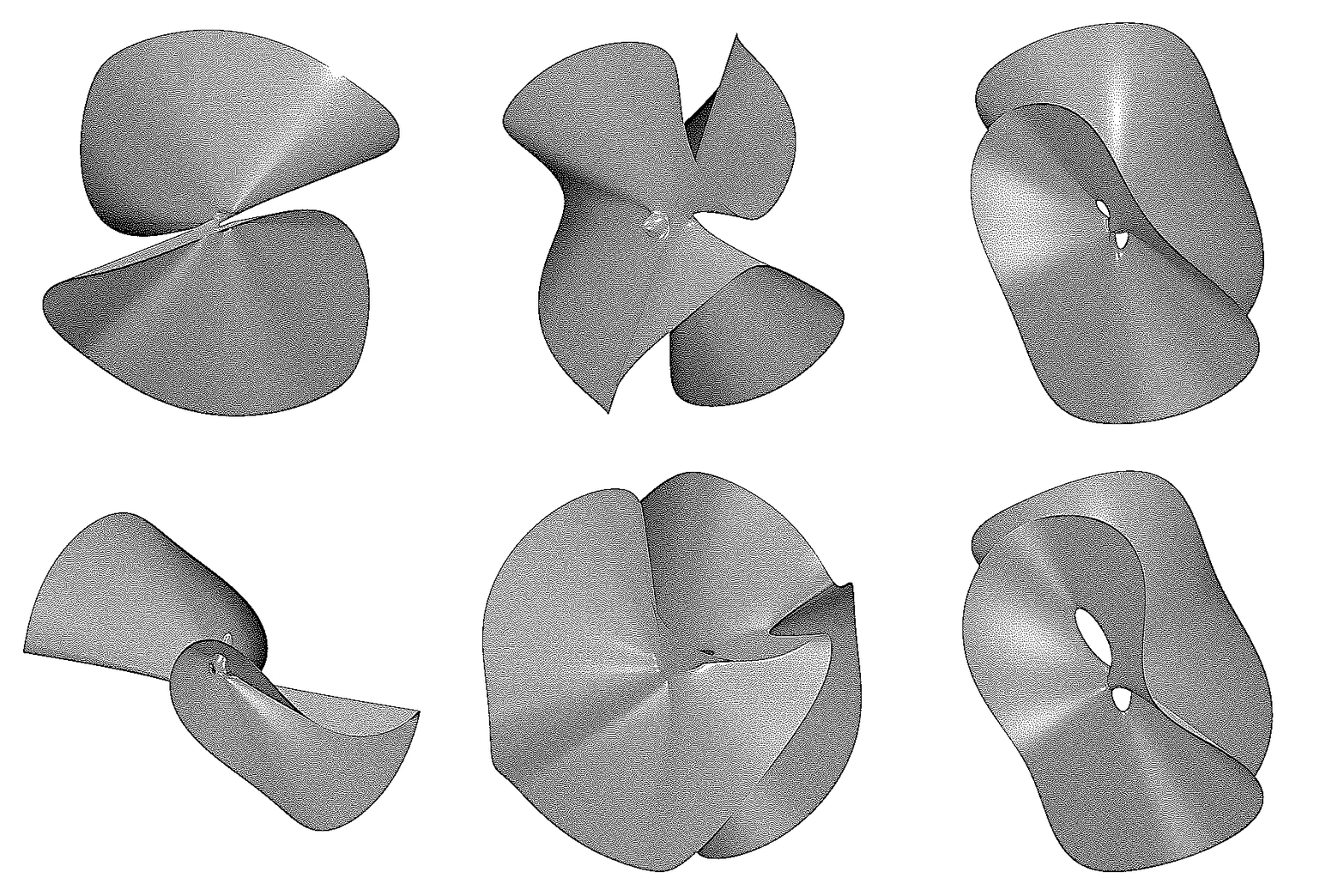
Elementary parallelism: a formal decomposition, linear elements following eachother like parallels and distorting the object. The object is completely stretched out, as if elastic. The lines follow eachother in parallels, while changing subtly to form movement, or the form of the object in question.
 def get_net_for_facet(P: Tope, i: int, keys=[]) -> Net: F = P.get_facet(i, meta_keys=keys)
G = get_facet_graph(F)
T = G.get_spanning_tree()
N = Net(F,
from tope import Tope
from tope.net import *
from tope.orth import *

from tests import normalize_polygon from typing import *
import json, os, numpy as np
rng = np.random.default_rng()
with open("polys.json") as fd: polys = json.load(fd)

logger.remove()
import matplotlib.pyplot as plt
from matplotlib.collections import LineCollection # container for line segments from matplotlib.text import Text, Annotation
import matplotlib.cm as cm # colour mappings
import random